
Container Dimensions
Most ocean cargo travels in large metal "boxes" known as containers. Since containers travel all over the world, there are some standards that are accepted. Following is the standard dimensions for the most commonly used containers. Click on the lengths for more info.
| LENGTH | WIDTH | HEIGHT | ||||
| DIMENSIONS |
20' 6058 MM |
40' 12192 MM |
8' 2438 MM |
8' 2438 MM |
8' 2591 MM |
9'6" 2896 MM |
| MINIMUM INTERNALDIMS |
19' 3" 5867 MM |
39'4 3/8" 11998 MM |
7'7 3/4" 2330 MM |
7'2 1/2" 2197 MM |
7'8 1/2" 2350 MM |
8' 8 1/2" 2655 MM |
| MINIMUM DOOR OPENINGS |
7' 6" 2286 MM |
7' 2134 MM |
7' 5" 2261 MM |
8' 5" 2566 MM |
||
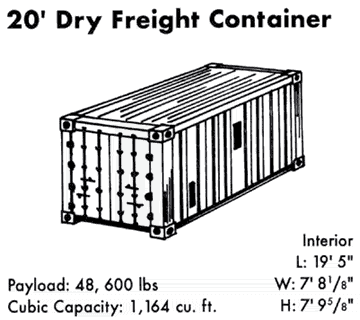
20' General Purpose Container (View Picture)
Suitable for any general cargo. Various lashing devices on the top and bottom rails and the corner posts.
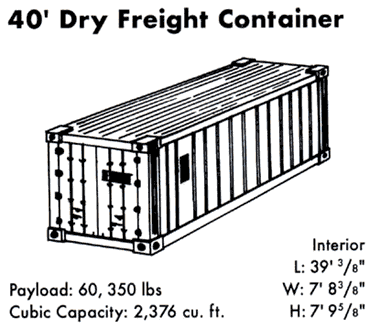
40' General Purpose Container (View Picture)
Suitable for any general cargo. Various lashing devices on the top and bottom longitudinal rails and the corner posts.
40' High Cube Container (View Picture)
Especially for light, voluminous cargo or cargo that exceeds normal height dimensions. Numerous lashing devices on the top and bottom longitudinal rails and corner posts.

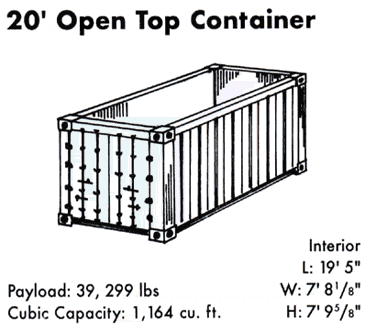
20' Open Top Container (View Picture)
Especially for overheight cargo or cargo loading with a crane. Door header can be swung out. Numerous lashing devices on the top and bottom longitudinal rails and the corner posts.
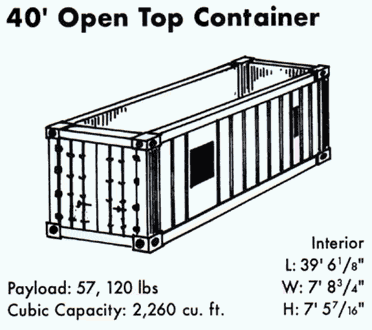
40' Open Top Container (View Picture)
Especially for overheight cargo or cargo loaded with a crane. Door header can be swung out. Numerous lashing devices on the top and bottom longitudinal rails and the corner posts.
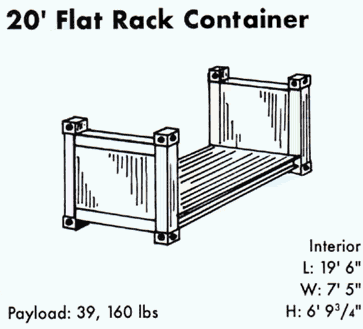
Flat Container (View Picture)
Especially for heavy loads and overwidth cargo. Flat containers are available in both 20' and 40' lengths. Numerous very strong lashing devices on the corner posts, longitudinal rails and on the floor.
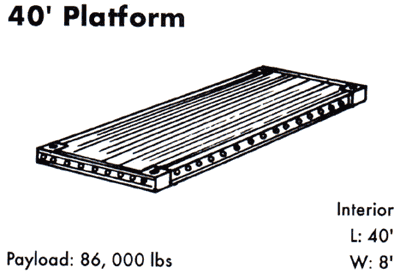
Platform Container (View Picture)
Especially for heavy loads and oversize cargo. Available in both 20' and 40' lengths. Numerous strong lashing devices on the longitudinal rails.
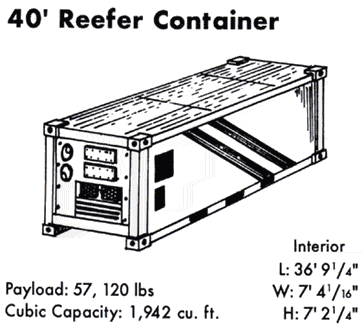
40' Refrigerated Container (View Picture)
Especially for cargo that needs temperature control. Controlled temperature and air flow.
40' High Cube Refrigerated Container (View Picture)
Especially for cargo that need temperature control. For voluminous cargo or cargo that is higher than normal. Controlled temperature and fresh air flow.
20' Tank Container (View Picture)
Especially for liquid storage while in transit. Liquid capacity between 21,000 - 24,000 liters. Tanks must be filled to no less than 80% of their capacity.
